Every movement has intention and that's what makes Qi Gong different
June 2026
One of the things I come back to again and again when I'm teaching is this: every movement in Qi Gong has intention.
We're not just moving for the sake of it. Different practices are designed to support different organs, emotions and energetic pathways within the body. Some movements help circulate energy. Some help ground. Some help soften excess heat. Some work with a particular organ, some work with the lymph.
This is one of the reasons I've never stopped being fascinated by the practice and why, after 400 hours of training and a daily personal practice, I'm still learning. The movement isn't separate from the philosophy. The two are completely intertwined.
Whilst every movement has an intention, we're never trying to force an outcome.
Because Qi Gong is also deeply somatic. In a lot of movement practices, and I say this without judgement, because I've been there too the focus is on achieving a result. The right shape. More flexibility. More strength. Less weight. And there's nothing wrong with those goals. But Qi Gong offers something different.
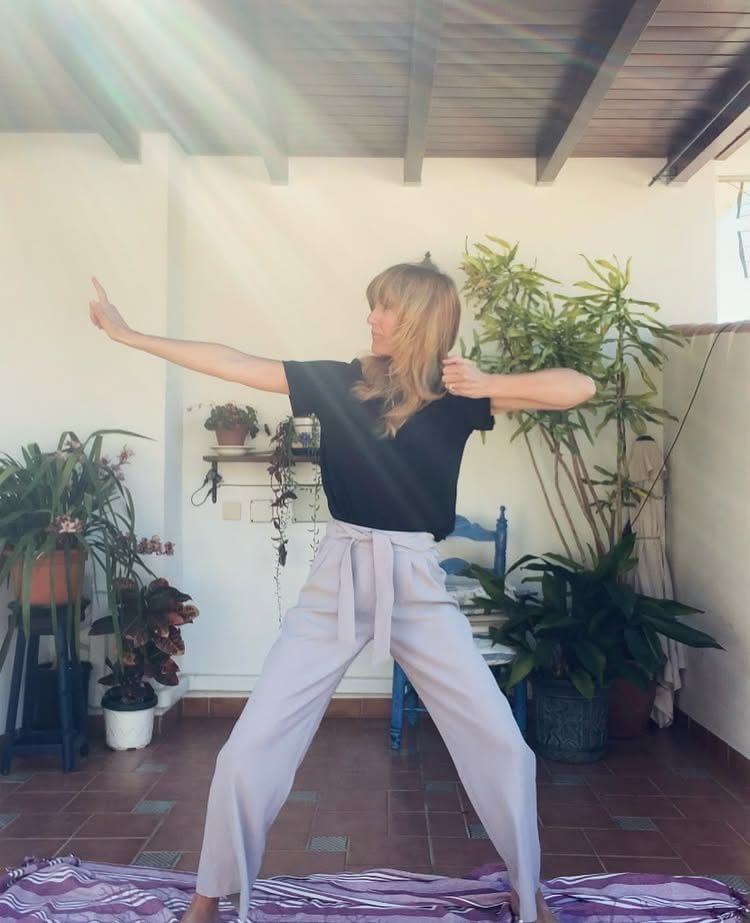
The focus shifts from achieving something to experiencing something. The movement becomes a guide and an invitation to notice where there is ease, where there is tension, what wants to soften, release or move. The answers will be different every time, because you are different every time.
I came to this practice through burnout. My body had been asking for rest for a long time before I finally listened. Qi Gong was one of the first things that helped me understand that my body wasn't broken it was communicating. Loudly. And I'd been overriding it for years.
One of the core principles of Traditional Chinese Medicine is that the body is an interconnected whole. We don't treat symptoms in isolation we look at the relationships between different systems and how they influence one another. The body is not a machine that's broken down. It's a living system that is constantly talking to us. Through energy. Through tension. Through fatigue. Through emotion.
The invitation isn't to fix it. It's to get curious.
Modern life makes this incredibly hard. We're taught to push through tiredness, ignore discomfort and keep going even when something inside us is quietly asking us to stop. I did this for years, and I know so many people who are still doing it now.
Qi Gong asks us to do the opposite. To slow down. To reconnect. To develop a deeper relationship with what the body actually knows which, in my experience, is quite a lot.
This is where the practice becomes truly interesting to me. Not in mastering the movement but in learning to listen. Because sometimes the most important thing a movement can do is bring you back into conversation with yourself.
And that, I think, is something most of us really need right now.